Fish Board cuts king salmon fishing
Published 2:55 am Wednesday, January 24, 2018
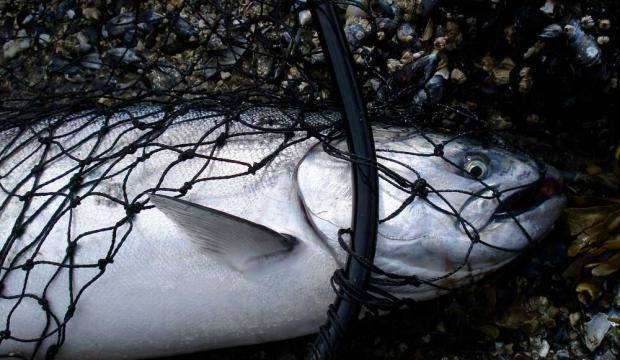
The Alaska Board of Fisheries has passed an “action plan” to help conserve struggling king salmon stocks on Southeast rivers during their last day of deliberations Tuesday in Sitka.
The plan will keep troll, sport and gillnet fishermen on the docks for significant parts of the fishing season. Commercial trollers, who made about half of their money fishing Chinook, had their pocketbooks significantly affected.
It was the best and most equitable solution the board and the Alaska Department of Fish and Game could come up with under dire circumstances for Chinook stocks on the Unuk, Chilkat, Taku and King Salmon rivers.
All six of the voting board members voted for the plan.
“Nobody is going to be happy with the end results, I am not happy with it. Everyone is feeling the crunch and the pain,” board member Israel Payton said.
The board heard three days of public testimony on finfish proposals. A majority of that testimony was heard on controversial herring proposals, but salmon came in close second.
Public testimony prompted changes to the action plan and the board held the vote until the last day of the meeting to allow public review of those changes.
The action plan combines ideas in several other proposals aimed at conserving Chinook stocks.
Troll fishermen will have their fishing areas and dates significantly cut back and won’t be allowed to fish the last six weeks of winter king salmon fishing.
Sport fishermen will be barred from retaining king salmon in the Juneau area (11A, 11B and 11C) from April 15-June 14, when the bulk of the king salmon run makes its way through the area.
The plan does provide for king salmon fishing in Juneau if there’s a surplus of hatchery king salmon above what Douglas Island Pink and Chum needs to produce more salmon.
If that’s the case, ADF&G will allow for a Terminal Harvest Area (THA) in the waters of Auke Bay and off of North Douglas, where hatchery salmon are known to congregate.
The sport fishing restrictions are similar to those imposed last year, when ADF&G barred the retention of king salmon in the spring, prompting the cancellation of the Juneau Spring King Salmon Derby.
The Haines area, near the Chilkat River, saw an even more drastic cut to sport fishing allowances: king salmon retention will be barred from April 15-Dec. 31 in area 15A, with a portion of the waters near Haines north of Seduction Point open after June 30.
The Central Council of Tlingit and Haida Indian Tribes of Alaska didn’t immediately return phone calls to confirm they were cancelling the derby this year.
Herring proposals
In a morning of controversial deliberations at the Alaska Board of Fisheries meeting Tuesday, subsistence users weren’t successful in herring conservation measures to cut commercial fishing harvests.
But a favored backup proposal, No. 106, did pass by a 6-1 vote: 4 square miles in Sitka Sound were added to a 10-square mile protected area reserved for subsistence harvest and barred from commercial fishing.
Sitka Sound’s herring are prized by commercial fishermen and subsistence users — many of them Alaska Natives — for their eggs. Herring are struggling region-wide in Southeast — only two of 15 groups around the region currently spawn in numbers high enough for the Alaska Department of Fish & Game to allow a commercial harvest, according to management biologist Scott Kelley.
During heated public testimony, traditional observation and knowledge was pitted against ADF&G studies and testimony from commercial fishermen.
Subsistence users said herring spawning patterns are being disrupted by commercial fishing. It’s harder now for subsistence users to access culturally-important herring eggs. But ADF&G studies have shown healthy numbers in Sitka Sound.
The board decided not to reduce commercial harvest because they didn’t have numbers to back it up. Board member Israel Payton, who voted against proposition 99, said he hesitated to disappoint subsistence users, but the numbers weren’t indicating a difficulty for subsistence users to get the eggs they need.
“I’ve sat on the other side of the table for many years, I’ve watch my father battle the board of fish for three or four cycles and get ejected from board meetings. … I look at subsistence issues very carefully,” Payton said.
But, Payton went on, the board does not have a mandate to limit industry unless there are conservation concerns or industry limits the ability of a “reasonably diligent” subsistence user to get what they need.
“The success rate of making the ANS (Amount Necessary for Subsistence) some years are 100 percent and the lowest year in 2002 was 88 percent. Some years it doesn’t make it, some years it does. When it goes to reasonable opportunity, reasonable opportunity is still there for a diligent person,” he said.
The Sitka Tribe of Alaska submitted proposal 99. In an attempt to give subsistence users a little of what they want, the board passed proposal 106, which will increase opportunity for subsistence fishermen not by limiting commercial fishermen, but by adding more area available to subsistence users, taking it from a zone previously reserved for commercial fishing.
“This is the right thing to do at this point to balance some of the other proposals,” board member Alan Cain said.
Proposal 106 passed 6-1, with John Jensen opposed. Proposal 99 carried 2-5, with Reed Morisky and Orville Huntington voting yes.
• Contact reporter Kevin Gullufsen at 523-2228 or kevin.gullufsen@juneauempire.com. Follow him on Twitter at @KevinGullufsen.