
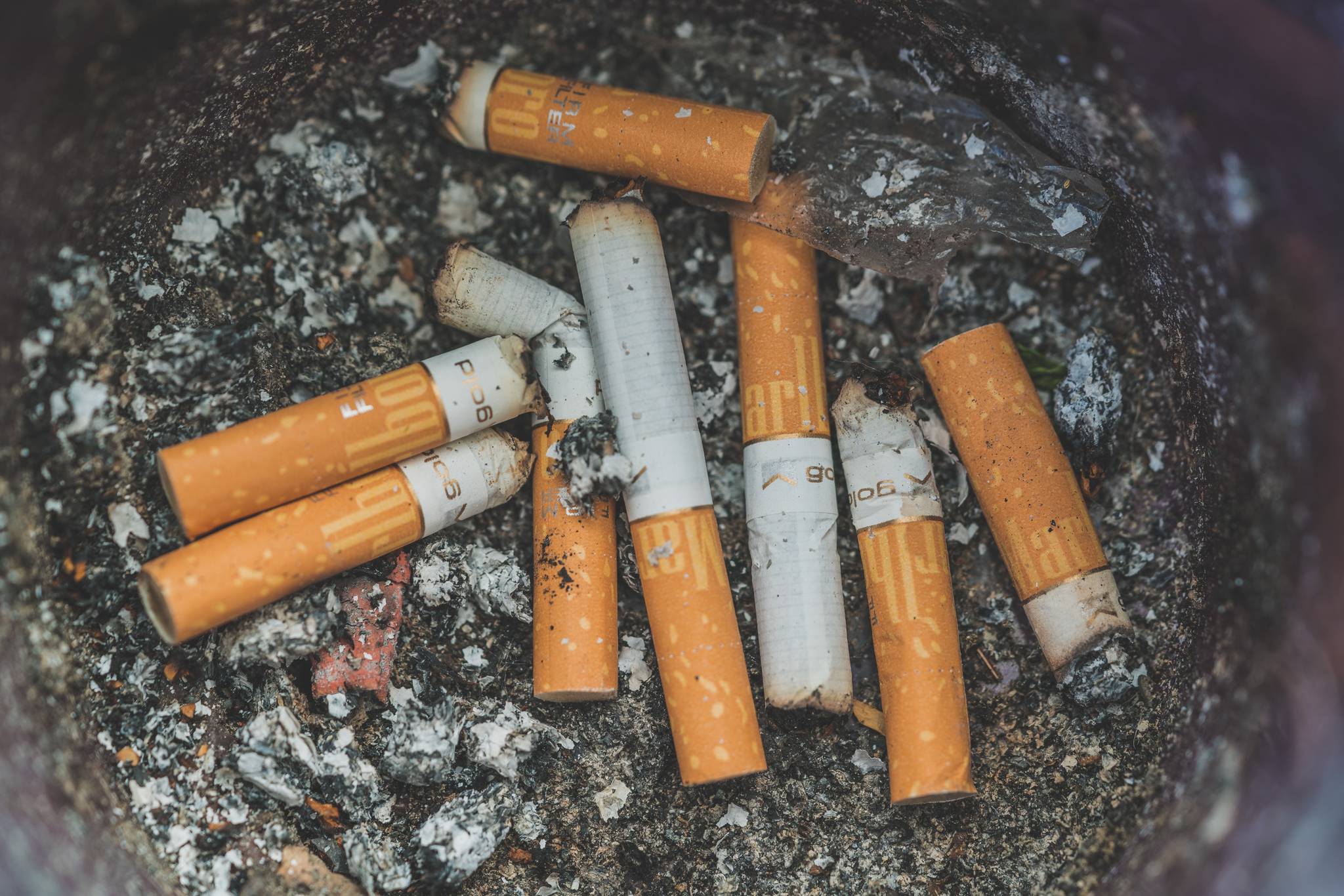
Alaska has made strides to keep tobacco out of adolescent hands, but there’s still room for improvement, according to a new report from the American Lung Association.
The 17th annual State of Tobacco Control report grades, which are given out like schoolhouse grades, were shared Wednesday, and Alaska’s report card was generally positive.
There was one exception — the minimum age for purchasing tobacco. For that category, Alaska earned a D.
In Alaska, the tobacco-buying age is 19, while the American Lung Association recommends 21 as a way to curb smoking in young adults.
“That’s really the newest tool in the toolbox,” said Marge Stoneking, Executive director for American Lung Association in Alaska, in a phone interview.
[It just got harder to smoke downtown]
Stoneking said 95 percent of smokers try their first cigarette before 21, which is a major reason the lung association advocates for an age increase.
Alaska is not alone in its younger-than-recommended tobacco age.
Nationally, just six states — Hawaii, California, New Jersey, Oregon, Maine and Massachusetts — have a tobacco-buying age of 21. In Alaska, one locality — Sitka —has adopted 21 as the minimum age for purchasing tobacco.
It was adopted and approved by the Sitka Assembly in May and went into affect in August, said Maegan Bosack, community affairs director for City and Borough of Sitka.
Stoneking said one of the reasons for the push is further understanding of how young adults’ brains are developing.
“The brain doesn’t fully develop until the age of 25,” Stoneking said.
The rest of the report card was a step in the right direction, Stoneking said.
The state received an A in state funding for tobacco prevention programs, a B for smoke-free workplace laws and access to services to quit and a C for state tobacco taxes.
For comparison, Washington received F’s for tobacco prevention funding, access to cessation services and the tobacco-buying age, an A for smoke-free air and a C for tobacco taxes.
Oregon received F’s for prevention funding and taxes, an A for smoke-free air, a D for access to cessation services and an A for tobacco-buying age.
Stoneking said tobacco prevention programs receive about $10 million in funding, which is what the Centers for Disease Control and Prevention would recommend based on the state’s population.
Smoke-free workplace laws received a major year-over-year grade bump.
“Up until this year we’ve gotten an F for smoke-free air,” Stoneking said. “This year, it’s a B. That’s a big deal.”
[Legislature bans smoking in bars, restaurants and other public places]
In 2018 the Legislature passed a statewide smoke-free workplace law and required vape shops to be licensed and subject to underage sales enforcement.
“That was the Legislature’s big win for tobacco-prevention,” Stoneking said.
However, she said the state received a B grade because localities can opt out of the ban, but so far none have opted out.
• Contact reporter Ben Hohenstatt at (907)523-2243 or bhohenstatt@juneauempire.com. Follow him on Twitter @BenHohenstatt.
