
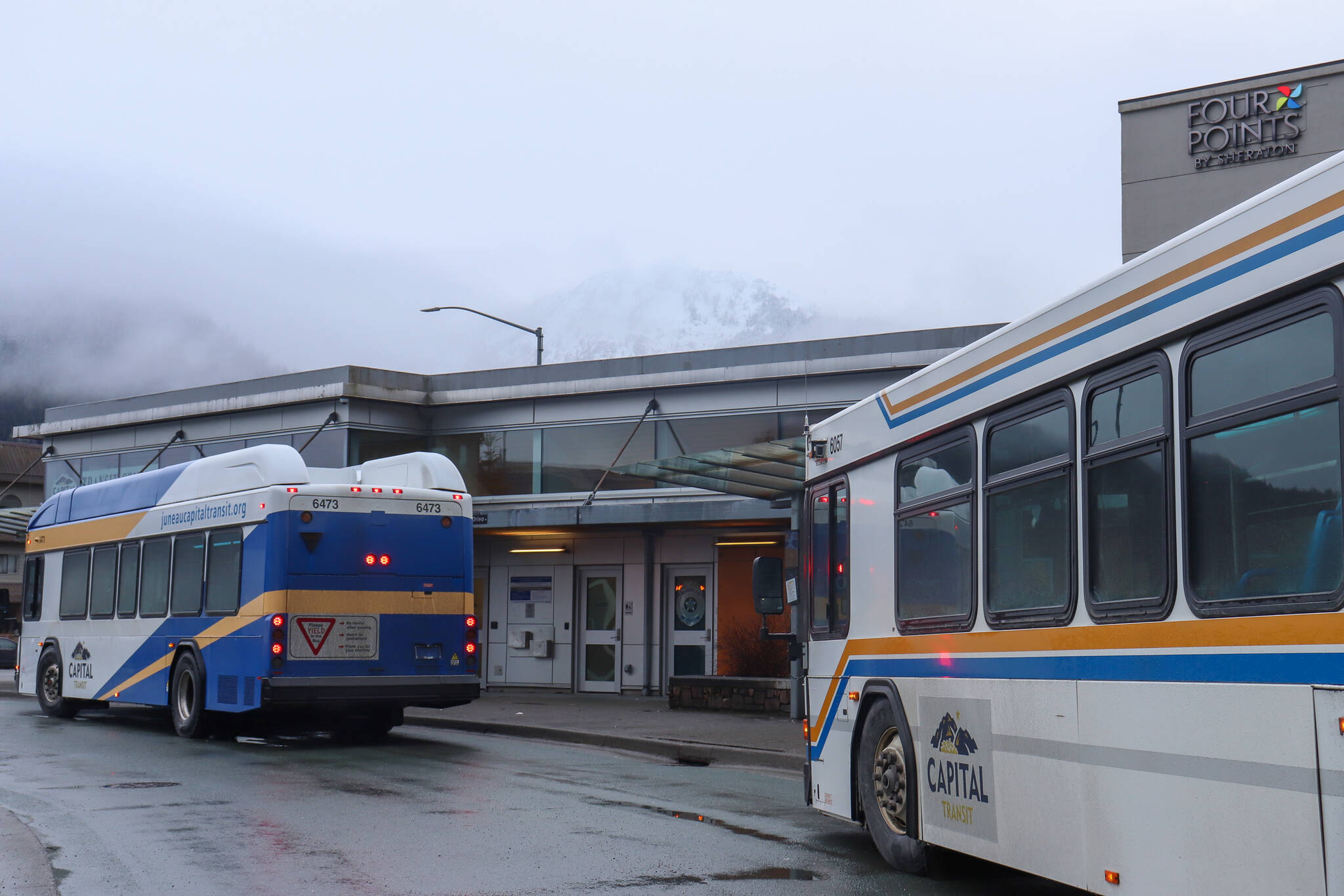
The City and Borough of Juneau replaced seven 2010 diesel buses with battery-electric vehicles in December, and now the fleet is getting its own charging station.
Rich Ross, superintendent of Capital Transit, said the new buses have run “flawlessly,” even in the winter, except for minor charging and operational issues. Despite a learning curve with the new technology, two to three electric buses have been out every day since being equipped for revenue service. The other four should hit the road in June.
“It’s been a far better experience than the electric bus we received in 2020,” Ross said. “These ones have a much higher range, so we haven’t been experiencing any of the range anxiety we had with that first electric bus.”
The city’s first electric bus has not moved in about two years, and Capital Transit is still seeking approval to sell or dispose of it.
The defective bus was made by the manufacturing business Proterra. First, it was down for nine months because it lacked a wiring harness. Once Proterra provided the city with the part, one of the bus’s transmissions failed. The company filed for bankruptcy in 2023, just as the bus was set to service the Mendenhall Express route. The bus was funded primarily through a Federal Transit Administration (FTA) grant, with the remainder from a settlement fund managed by the Alaska Energy Authority.
Ross said the new buses run on all routes and currently take up to six hours to charge at Bentwood Place. They started arriving last October, and the first bus went into service in January. During 20-degree weather that month, the buses served Capital Transit’s longest routes and still had battery capacity at the end of the day.
“We were able to complete 10- and 11-hour routes with them and have them return back to our bus barn with 27% beta charge remaining,” he said.
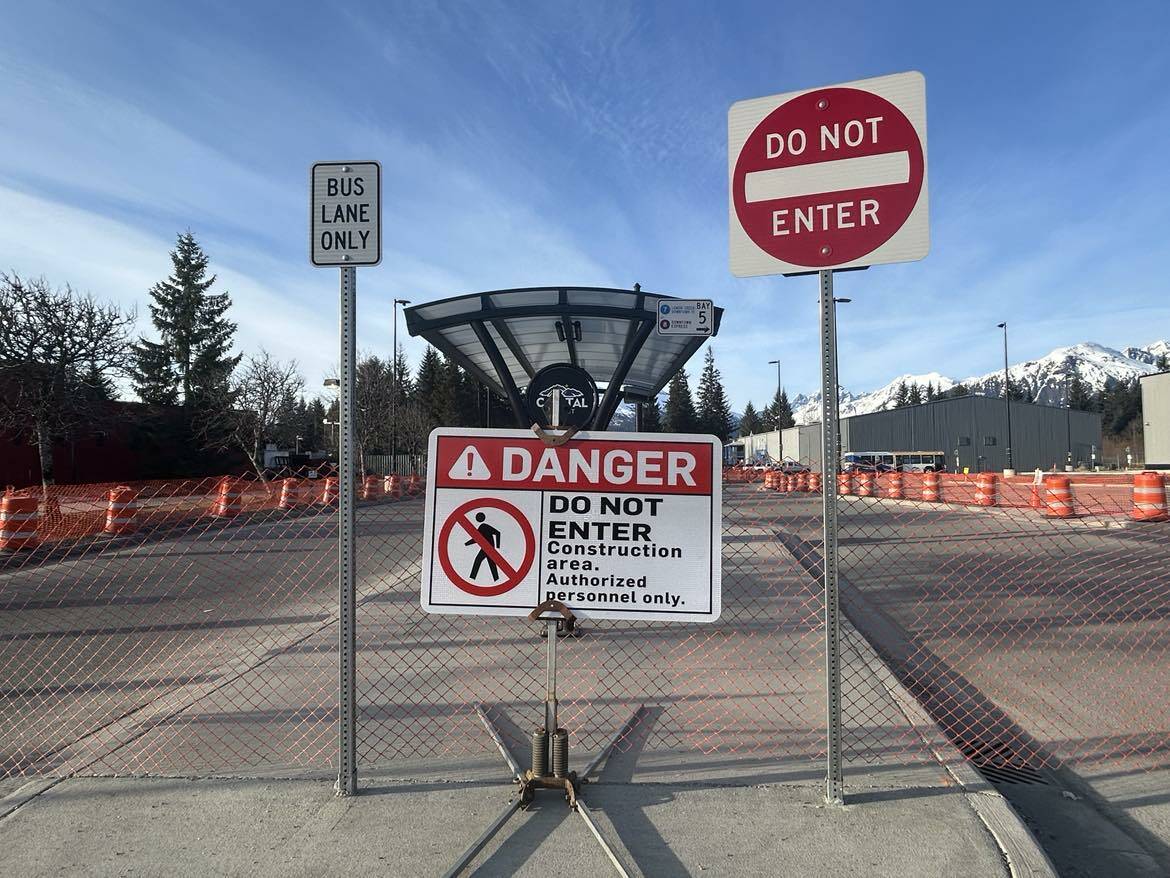
Construction begins at the Valley Transit Center on Monday, March 31, 2025. (Jasz Garrett / Juneau Empire)
The working electric buses were manufactured by Gillig, the same company that supplies the city’s diesel fleet. The electric bus interiors have a similar layout, offering passengers a familiar but quieter riding experience. Passengers now have the option to charge mobile devices. This month, Capital Transit also plans to add the ability to pay for bus fare online through a mobile app, Token Transit. Fares by cash and physical passes will still be accepted.
The electric buses may offer a smoother ride, but passengers will experience temporary inconveniences as their new on-route charging system is installed at the Valley Transit Center. During the construction, the public parking lot, restrooms, and public electric vehicle chargers will be unavailable, and passengers will board and depart the bus from the Park & Ride lot just behind their usual stop, near The Alaska Club. Construction began Monday and is expected to be completed by mid-summer. A notice posted by Capital Transit states, “This upgrade will help us provide cleaner, more efficient transportation for our community.”
The project is estimated to cost approximately $1.6 million, which is primarily covered by an Alaska Department of Transportation and Public Facilities grant, with CBJ paying $160,759.
Ross emphasized he’s not experiencing the same anxiety he did with the city’s first electric bus, but President Donald Trump’s executive order to end an electric vehicle mandate on Jan. 20 may put the brakes on future plans.
“It shouldn’t affect these buses at all,” Ross said. “Those funds have already been secured, but future funding is to replace our other aging-out diesel buses. That’s the big question we have, if there’s still going to be funding for electric buses or not.”
Eleven diesel buses remain in the Capital Transit fleet, four of which would be eligible for replacement in 2028 and the other seven in 2030. In the past, the FTA offered funding when buses hit 12 years of age or 500,000 miles.
CBJ was awarded $5 million in funding for the electric buses through the FTA’s Low- or No-Emission (Low-No) Grant Program, which assists state and local governments in purchasing or leasing zero-emission and low-emission transit buses.
• Contact Jasz Garrett at jasz.garrett@juneauempire.com or (907) 723-9356.
