
BRIAN MELLEY
Associated Press
LOS ANGELES — The Sierra Club apologized Wednesday for racist remarks its founder, naturalist John Muir, made more than a century ago as the influential environmental group grapples with a harmful history that perpetuated white supremacy.
Executive Director Michael Brune said it was “time to take down some of our own monuments” as statues of Confederate officers and colonists are toppled across the U.S. in a reckoning with the nation’s racist history following the police killing of George Floyd in Minneapolis.
Muir, who founded the club in 1892, helped spawn the environmental movement and is called “father of our national parks,” figures prominently in what Brune called a “truth-telling” about the group’s early history.
“He made derogatory comments about Black people and Indigenous peoples that drew on deeply harmful racist stereotypes, though his views evolved later in his life,” Brune wrote on the group’s website. “As the most iconic figure in Sierra Club history, Muir’s words and actions carry an especially heavy weight. They continue to hurt and alienate Indigenous people and people of color.”
Muir, who was born in Scotland, came to the U.S. as a young man and traveled and wrote extensively, romanticizing nature in breathless passages. He emphasized the need to preserve the land but also disdained American Indians as dirty savages and Black people as lazy “Sambos,” a particularly offensive slur.
He also kept company with other early club members and leaders, such as Joseph LeConte and David Starr Jordan, who advocated for white supremacy and promoting the race through eugenics, which called for forced sterilization of Blacks and other minority groups, Brune said.
Until recent years, Muir’s legacy has been largely untarnished and focused on his conservation efforts, such as saving Yosemite Valley before it became a national park and preserving the world’s largest trees in what became Sequoia National Park.
But Richard White, a Stanford history professor, said Muir’s advocacy for wilderness has an inherent racial bias.
Muir’s image of pristine wilderness unshaped by humans only existed if native people weren’t part of it. Even though they had been there for thousands of years, Muir wrote that they “seemed to have no right place in the landscape.” American Indians needed to be removed in order to reinvent those places as untouched.
“There is a dark underside here that will not be erased by just saying Muir was a racist,” White said. “I would leave Muir’s name on things but explain that, as hard as it may be to accept, it is not just Muir who was racist. The way we created the wilderness areas we now rightly prize was racist.”
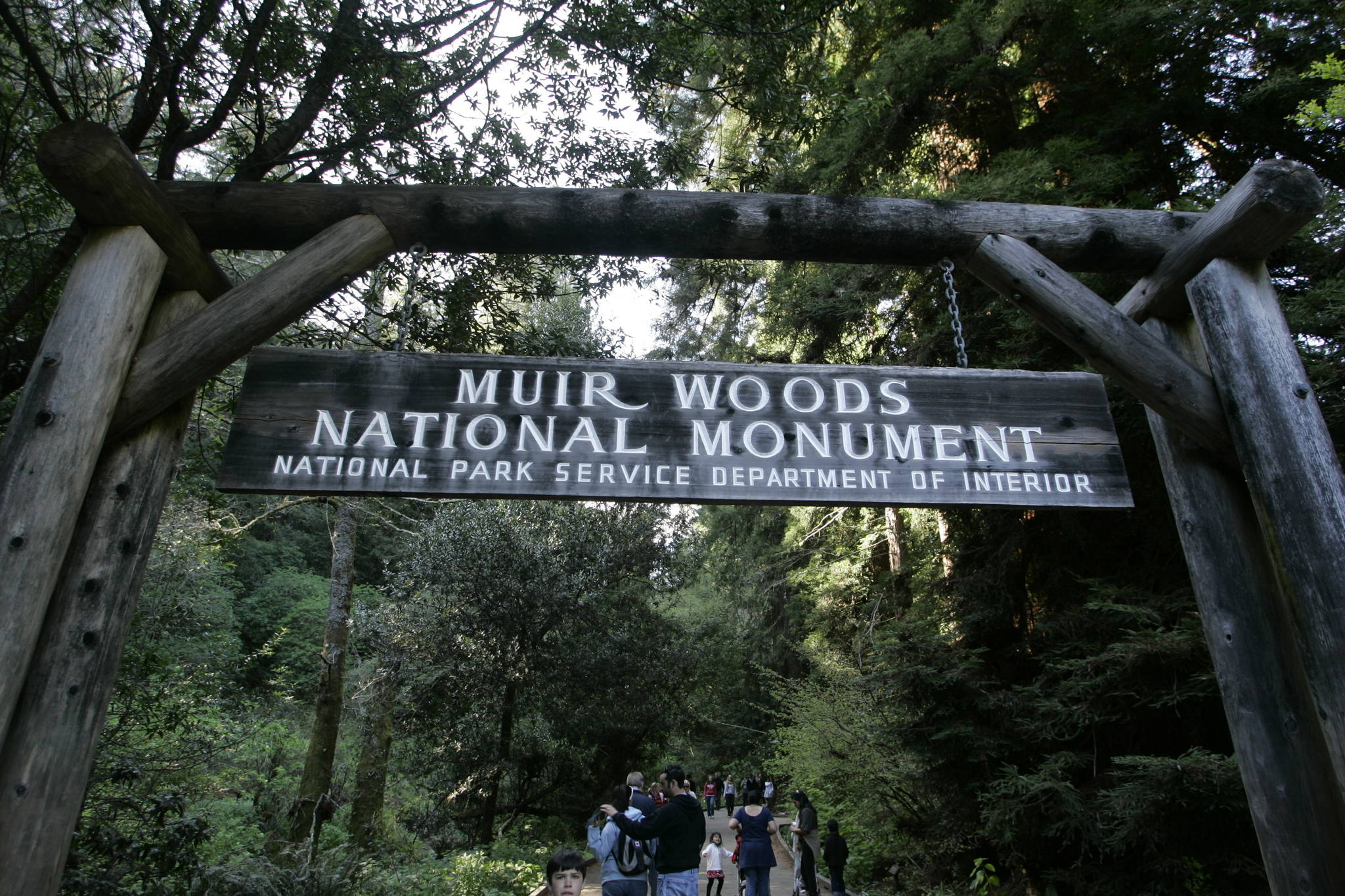
Muir is so widely revered that his name appears across California on everything from schools to national monuments, one of the state’s highest peaks, a giant swath of scenic Sierra Nevada wilderness that is bisected by a trail in his name and a national historic site. The discernible profile of Muir — with long beard, brimmed hat and walking stick gazing at Yosemite’s Half Dome — was stamped on the 2005 California quarter when the U.S. Mint was producing a commemorative coin for every state.
In Alaska, where he traveled extensively, a glacier and an inlet in Glacier Bay National Park and Preserve are named for Muir, as likely is a mountain east of Anchorage.
You can’t walk into a national park gift shop without coming face-to-face with T-shirts, mugs and tchotchkes bearing one of his pithy — often overused — quotes, such as “The mountains are calling and I must go.”
Revisiting Muir’s offensive remarks comes as environmental groups and the outdoor industry aim to be more inclusive during renewed racial awareness following Floyd’s death. The killing of the Black man in May has sparked weeks of protests and led to calls to rename places named for Confederate officers and remove statues of historical figures who held slaves or colonized or exploited Native Americans.
Brune said the Sierra Club once excluded people of color as it catered to middle- and upper-class whites. He said the focus on preserving recreational lands once inhabited by Indigenous people who had been driven out by white settlers willfully ignored the plight of minorities who were fighting environmental injustices in their own communities.
“For all the harms the Sierra Club has caused, and continues to cause, to Black people, Indigenous people, and other people of color, I am deeply sorry,” Brune wrote.
He pledged to hire a more diverse staff and invest in environmental and racial justice work.
• This is an Associated Press report.
