
In a 28-11 vote, the Alaska House has approved Senate Bill 91, a sweeping reform of Alaska’s criminal justice system that ends the War on Drugs in Alaska and promises to make one of the most significant changes to Alaska’s crime laws since statehood.
The vote took place after four days of debate on amendments and the merits of the bill, which has already passed the Senate. The measure will now return to the Senate, which will be asked whether or not to concur with amendments made in the House.
Senate Majority Leader John Coghill, R-North Pole and the principal author of the bill, sat in the House gallery as lawmakers voted. After the vote, House representatives came by to offer their congratulations.
Coghill said he’ll examine the amendments made in the House as the bill returns to the Senate. If the Senate approves of those changes and the bill is signed by Gov. Bill Walker, it will become effective.
The bill is the product of several years of study by the Alaska Criminal Justice Commission, which in December recommended 21 changes to the state’s justice system to reduce the growth of Alaska’s prison population.
In broad strokes, the 116-page SB 91 encourages alternatives to prison, such as electronic monitoring, probation and diversion programs. It also reduces the mandatory minimum sentences on many crimes, allowing more nonviolent offenders to be eligible for these alternatives.
Most of the state’s class C felonies — generally those not dealing with sexual assault or violence — will be punishable only by probation and a suspended jail sentence.
Most instances of simple drugs possession will no longer be punishable with jail time.
“The War on Drugs … has failed,” said Rep. Matt Claman, D-Anchorage and a former public defender.
The state will put fewer people in prison ahead of trial and install programs designed to keep criminals from returning to jail after their sentence is finished.
Speaking on Friday, Claman said he doesn’t see the bill as an end to the War on Drugs, but as a change in the approach to it. “We tried this war on drugs, and as a consequence we have far more people in jail,” he said by phone. “It’s a recognition that that effort hasn’t worked.”
Rep. Dan Saddler, R-Eagle River, voted in favor of the bill and said it isn’t about being soft on crime or being hard on crime.
“This bill is more a demonstration about whether we will be smart on crime,” he said. “Justice doesn’t always mean the ultimate punishment for every crime.”
Speaking on the floor, Claman explained that two-thirds of Alaskans jailed by the state will ultimately return to prison for other offenses because their lives have been so disrupted by prison that they have no alternative to crime.
“We know that when it comes to corrections, our state’s current system isn’t working,” said Rep. Gabrielle LeDoux, R-Anchorage. “It’s not helping them, and it’s not helping the public because they’re returning and they’re committing crimes.”
“Right now, the system that we have is just completely insane,” added Rep. Tammie Wilson, R-North Pole.
The House and Senate combined have held more than 45 hearings on the bill, in addition to the years of work and planning conducted by the criminal justice commission.
Despite that oversight, several members of the House said they voted against the bill because they’re concerned that it may have unknown effects.
Rep. Craig Johnson, R-Anchorage, explained that the criminal justice commission was recommending changes that would reduce the state’s prison population by about 21 percent.
“I’m not sure this is just as big a gamble as just letting every fifth person go,” he said. “Think long and hard about the gamble we are going to be making here.”
The divisions in the House on Senate Bill 91 did not fall along traditional Republican/Democratic or majority/minority caucus lines. Conservative Republicans voted for it and against it. Progressive members of the Democratic-led minority followed the same pattern.
“In my opinion, this is the worst bill I’ve ever seen as a member of the Legislature,” said Rep. Andy Josephson, D-Anchorage and a former prosecutor.
“This is the most dangerous piece of legislation I’ve ever seen,” agreed Rep. Lora Reinbold, R-Eagle River.
Despite those and similar concerns, a majority of lawmakers followed the thoughts of Rep. David Guttenberg, D-Fairbanks, who stood on the floor and reminded them, “If this bill goes away, we go back to a system that we know is broken.”
Rep. Cathy Muñoz, R-Juneau, shared an example of what can happen under that “broken” system.
When she attended high school in Juneau, one of her classmates was a man named Mark Canul, who later suffered from paranoid schizophrenia. In December, he was arrested on the streets of Anchorage.
While awaiting a court hearing, he was killed in prison, allegedly by a fellow inmate.
Under SB 91, Muñoz said, “I’m 100 percent sure that he would not have been held in prison, and he would be alive today.”
• Contact reporter James Brooks at james.k.brooks@juneauempire.com.
Editor’s Note: This story has been edited with additional comments clarifying the intent of Rep. Matt Claman’s floor speech.
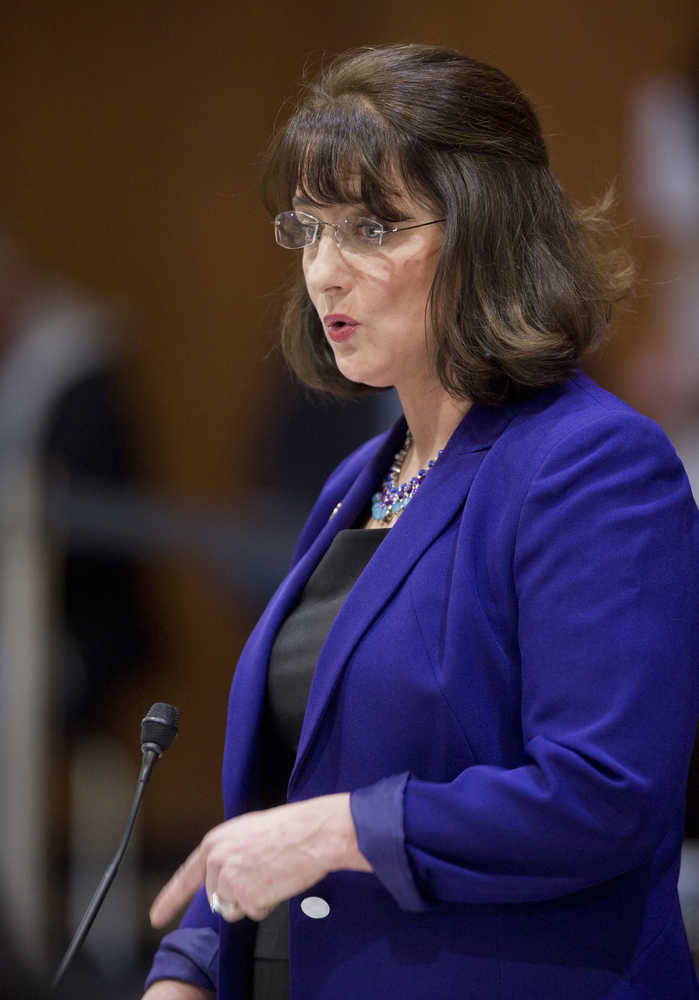
Rep. Lora Reinbold, R-Eagle River, speaks against the crime bill during the House’s floor session in the Terry Miller Building on Thursday.
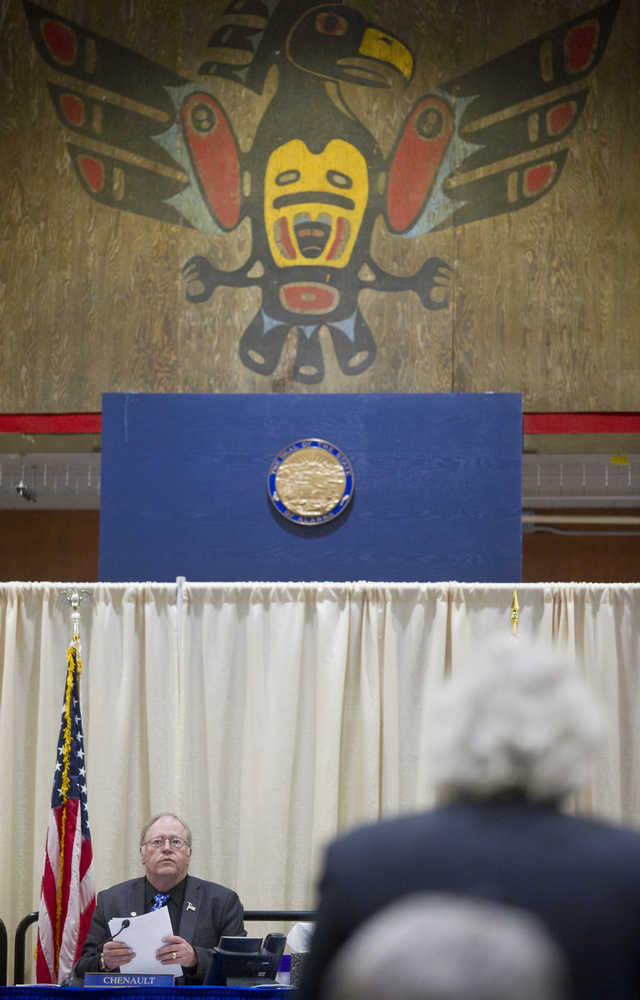
Speaker of the House Mike Chenault, R-Nikiski, listens to Rep. David Guttenberg, D-Fairbanks, during debate on the crime bill during the House’s floor session in the Terry Miller Building on Thursday.
