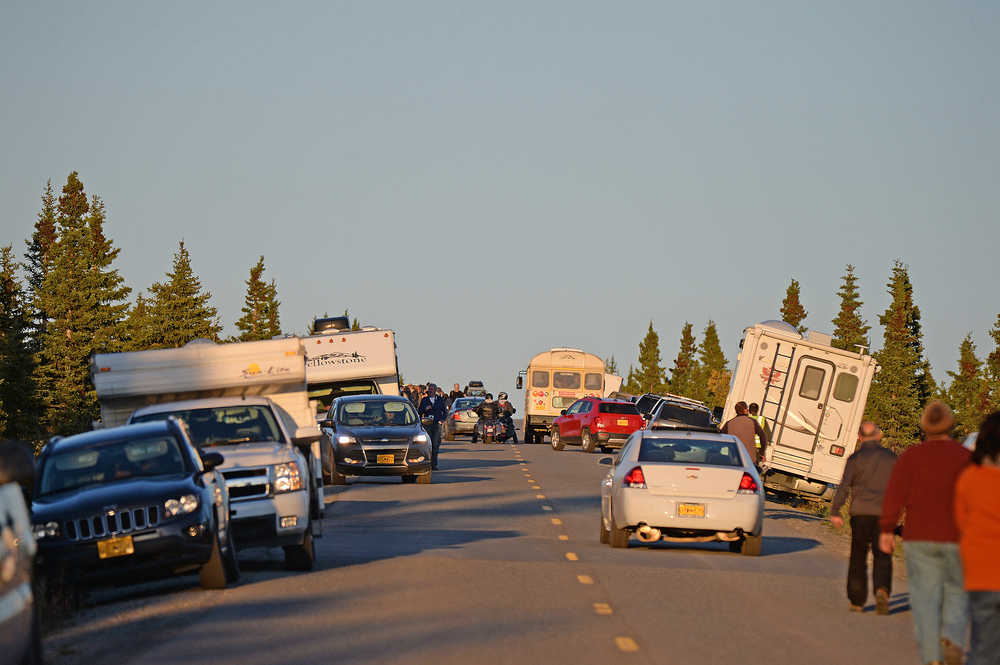
HELENA, Mont. — As the National Park Service kicks off a centennial summer expected to draw record crowds, the agency is seriously considering caps on how many people pass through some of the country’s most iconic landscapes and historical sites each day.
Park managers have begun looking at whether, when and how best to manage the impact of more people on the parks, their features and the visitors’ experience.
“Fundamental to the mission of the National Park Service is preservation of natural and cultural resources, social and ecological values, for the enjoyment, education and inspiration of this generation and those to come,” said Rose Keller, social scientist at Denali National Park and Preserve in Alaska.
Denali and Yellowstone plan to survey visitors about their experiences this summer, hoping the responses will provide insight on what limitations visitors might accept.
Arches and Canyonlands national parks in Utah have been taking public comment on their plans for tighter rules about how many people can be in the park at the same time. Grand Teton National Park in Wyoming should announce by the end of the year how it intends to limit access to a popular roadway.
It’s not clear how individual parks would make up for any shortfall in revenue from letting in fewer paying customers. Some parks, including Mesa Verde National Park in southwestern Colorado, already employ congestion pricing, charging more per person and per vehicle during the peak season that begins this weekend.
Last summer at Grand Canyon National Park, park managers increased entrance fees and moved lines along by dedicating an entrance gate to people who already had an annual park pass. They also promoted the use of shuttles.
Nearly 4.1 million people visited Yellowstone National Park in 2015, a 17 percent increase in visitors over 2014 — or an additional 580,000 people. There weren’t enough bathrooms or parking spaces. Trash cans overflowed. Wildlife jams caused waits of up to two hours along park roadways. Staff and visitors reported pulses of crowding at popular spots, partially due to an increasing number of tour buses, Yellowstone social scientist Ryan Atwell said.
This season, the park hired extra workers and added bathrooms and trash cans in key locations. Yellowstone has seen a 60 percent increase in visitation in the first few weeks of the 2016 season, Park Superintendent Dan Wenk has said.
If the growth continues, Wenk told a gathering of business people last week, he could envision a peak-season limit on Yellowstone visitors, albeit not for at least a decade.
“We realize that currently we’re on an unsustainable course in terms of demands for visitation compared to the ability of the current park system to handle it,” Atwell said.
Last year’s record crowds pushed Yellowstone over some thresholds as far as employee and visitor safety and propriety, he said.
In 2015, interpretive rangers gave out 52,036 resource warnings for behaviors such as threatening thermal features, approaching wildlife too closely, hiking in restricted areas and “taking bathroom breaks outside of the restroom.” That number was a 19 percent increase over the 43,558 citations issued in 2014.
From 2014 to 2015, motor vehicle accidents with injuries were up 167 percent, emergency medical transports to facilities outside the park were up 37 percent and search and rescue operations were up 61 percent, Atwell said.
In anticipation of another record year, people who plan to check out Yellowstone’s grandeur are being asked to be patient and plan ahead, respect the park, consider entering the park before 9 a.m. or after 3 p.m. to avoid larger crowds, drive responsibly and learn how to travel in bear country. Visitors are reminded to stay on the boardwalks, because hot springs have caused more injuries than wildlife. Park officials also urge visitors to “practice safe selfies” and not approach wildlife to take pictures.
Arches and Canyonlands national parks in Utah are looking at additional options to address increased visitor numbers, including a timed entry system, building more parking lots and other infrastructure, setting a daily cap on vehicle entrances and adding a private shuttle service.
Grand Teton expects a final decision by the end of the year on a proposal to limit visitor capacity on the 7.1-mile Moose-Wilson Corridor to 200 cars at a time, which would include implementing wait times during peak visitation days and times. Visitors to the Laurance S. Rockefeller Preserve in Grand Teton are limited by the 50 available parking spaces, park spokeswoman Denise Germann said.
“What we’re trying to create and manage is the experience that you come to the Moose-Wilson to enjoy, and protect the resources of that corridor,” Germann said.
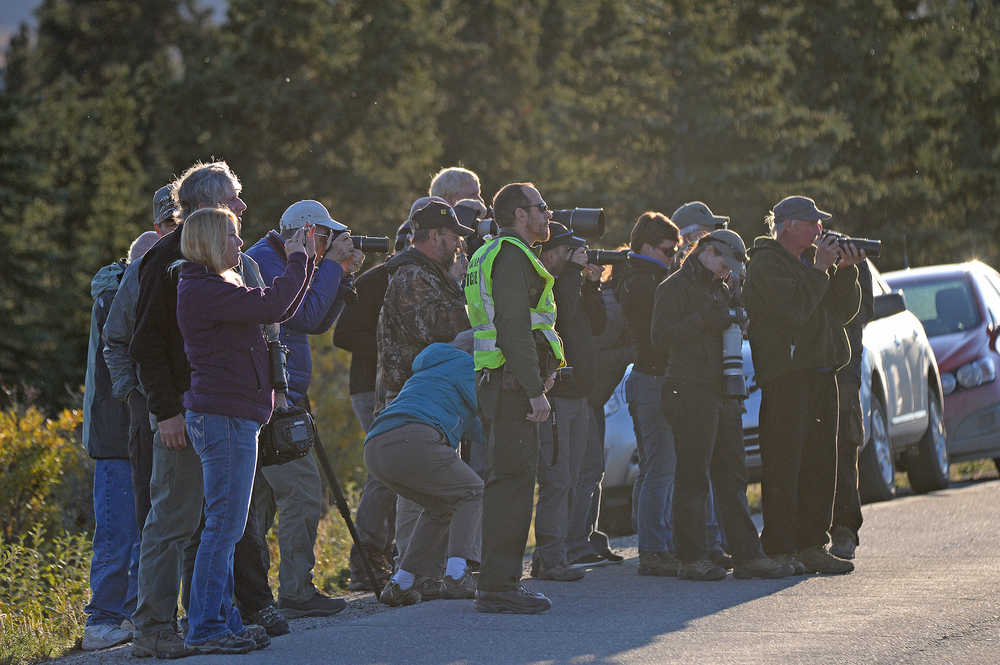
In this 2015 file photo, a Denali National Park and Preserve ranger ensures photographers stay a safe distance from wildlife. In this 2015 file photo, cars are shown lining the road at Denali National Park and Preserve as photographers take pictures of wild animals. Denali and Yellowstone plan to survey visitors about their experiences this summer, hoping the responses will provide insight on what limitations visitors might accept.
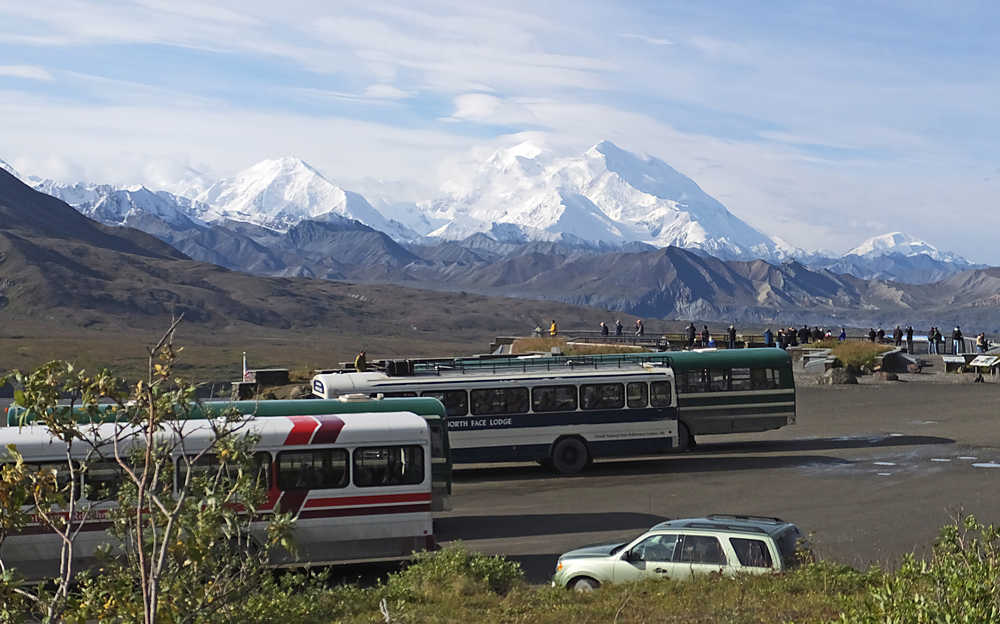
In this 2015 file photo, the Eielson Visitor Center, a popular attraction inside the Denali National Park & Preserve, is shown. In this 2015 file photo, a Denali National Park and Preserve ranger ensures photographers stay a safe distance from wildlife. Denali and Yellowstone plan to survey visitors about their experiences this summer, hoping the responses will provide insight on what limitations visitors might accept.
